
About Parish Foods

Meet the Owner, Blaine Gary
Blaine Gary is the owner and operator of Parish Foods, a Louisiana-based co-manufacturing facility serving independent food brands across the region. With more than a decade of hands-on experience in food production, Blaine has worked at every stage of the process—from formulation and packaging to scaling production for retail, foodservice, and institutional customers. His background gives him a practical, operations-first approach to manufacturing, focused on making products that are consistent, compliant, and ready for real-world distribution.
Blaine works closely with founders to understand not just what they want to make, but how their product needs to function in the market. He is known for being accessible, straightforward, and deeply invested in the success of the brands he produces. At Parish Foods, his priority is building long-term partnerships with businesses that care about quality and are serious about bringing well-made products to market.
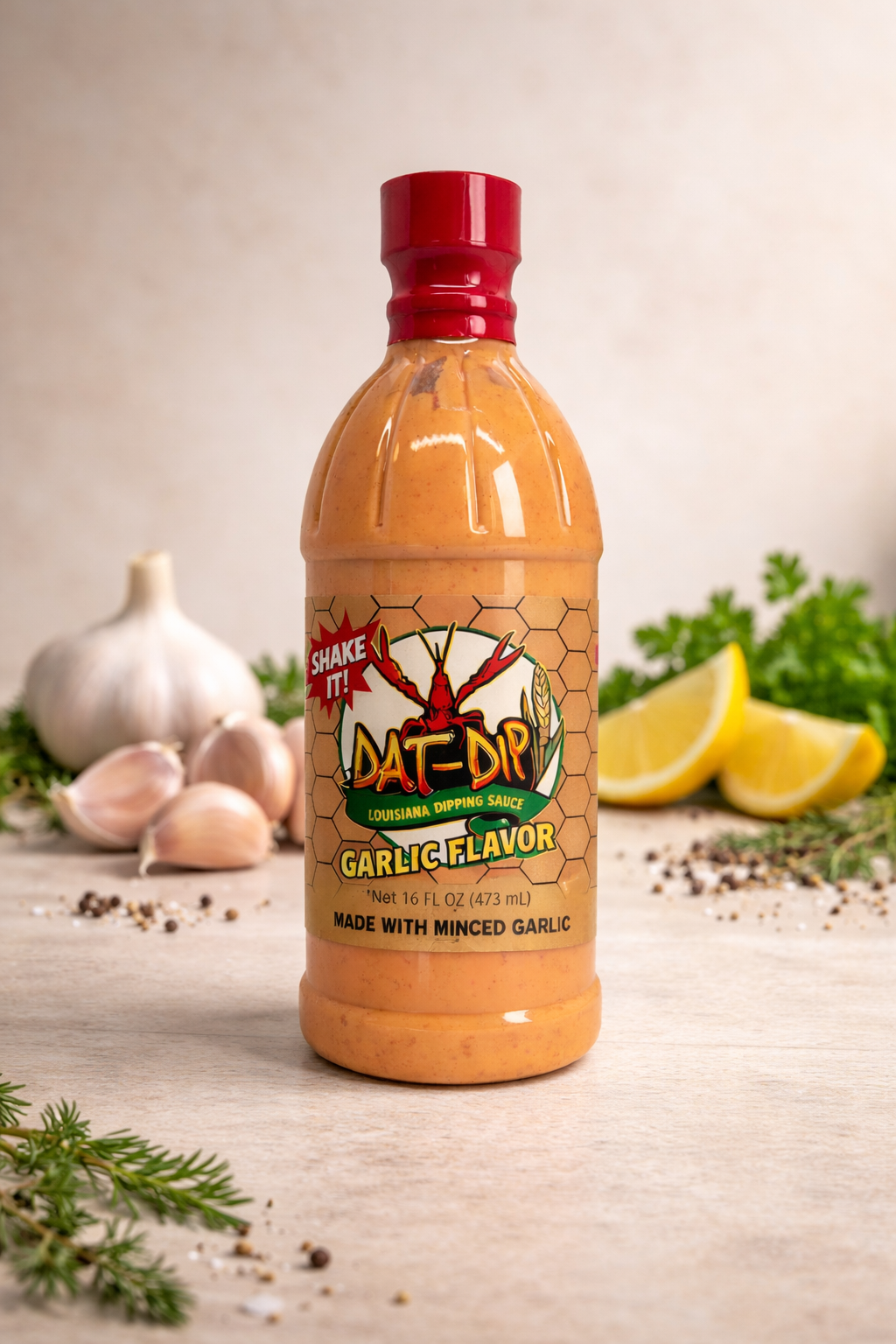
The Story of Dat Dip (Dat Cajun Boy’s Co.)
In 2010, Blaine Gary started Dat Cajun Boy’s Co. with a simple idea: make the first crawfish dipping sauce in a squeeze bottle. The concept came straight from the crawfish table. At boils, everyone gathered around the pot, socializing, then stalled out waiting on mayo and ketchup to mix a dip. The thought was obvious—if the dip was already in a squeeze bottle on the table, people would already be eating.
Production started small. Really small. A 10-by-16 building was hauled next to Blaine’s parents’ house, inspected, and approved for state and federal food manufacturing. Early batches were about 40 gallons a day, filled by hand using a half-gallon lemonade pitcher borrowed from his mom’s kitchen. Once bottled, everything went into the back of a truck, and Blaine didn’t head home until every case was sold.
He pitched the product directly to local supermarkets and seafood businesses. Even though crawfish dipping sauce wasn’t a category anyone had seen before, most stores took it on. Demand followed. As distribution grew—including acceptance into Walmart—the operation quickly outgrew the original space and moved into a 2,400-square-foot facility in Lafayette, where Dat Dip was produced for the next six years.
Blaine didn’t come from a food manufacturing background. He came from cooking, experimenting, and figuring things out by doing the work—developing flavors, selling product, and learning the realities of getting food onto shelves.
The Start of Parish Foods
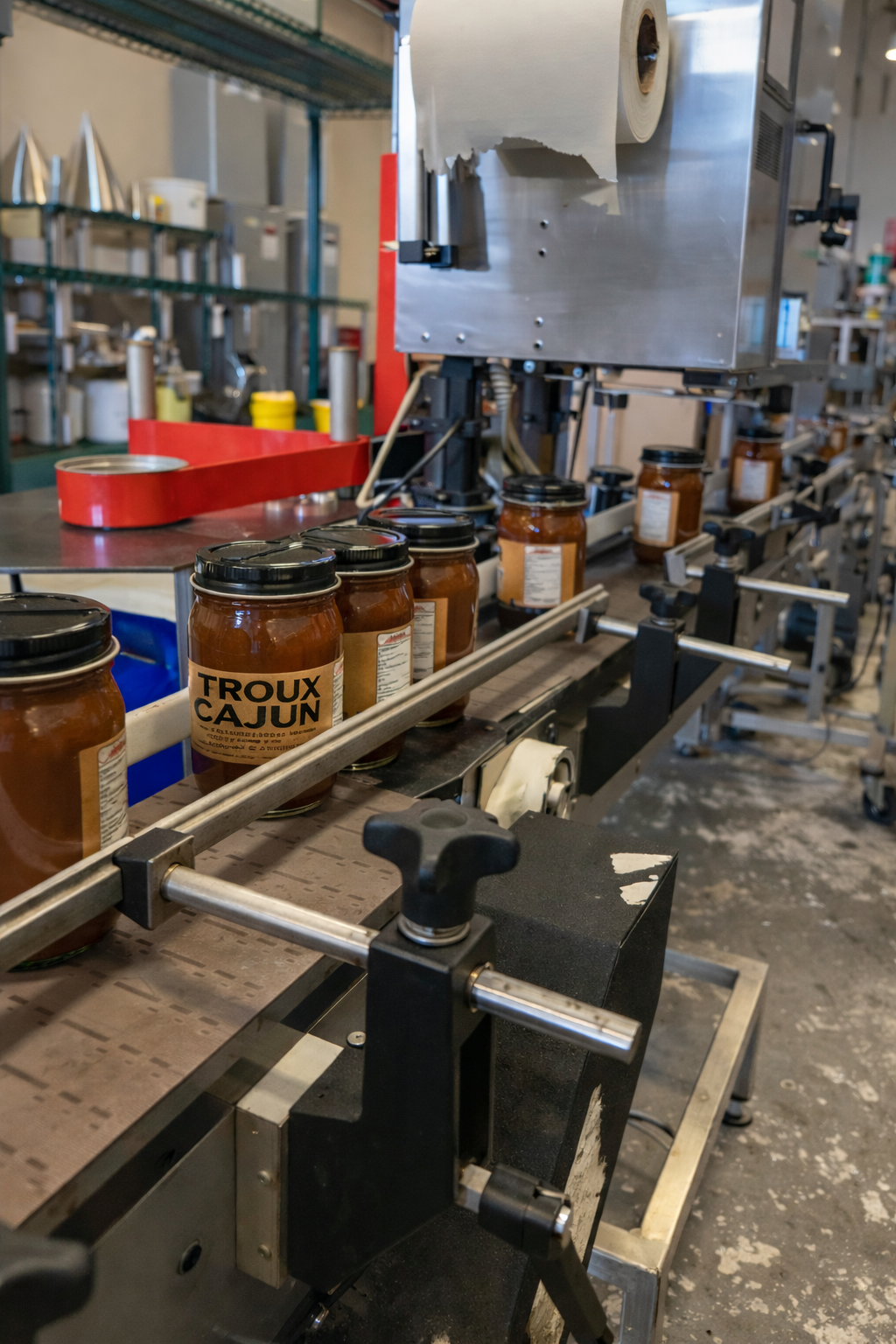
Crawfish dipping sauce is seasonal, so as Dat Dip grew, so did an opportunity. Other Louisiana food businesses needed help making their products, and the facility had the capability to do it. What began as a way to stay busy between seasons evolved into full-scale co-manufacturing.
Parish Foods was built on that foundation. Today, the facility manufactures a wide range of products for retail, foodservice, and institutional customers. The operation supports both hot and cold fill in plastic and glass, with packaging ranging from 2-ounce sealed cups to bottles, gallons, and five-gallon pails.
What hasn’t changed is the perspective. Parish Foods works primarily with independent brands and regional businesses that care about quality and want to make the best product possible.
Every product that comes through the facility is treated with the same care and seriousness as Dat Dip was in the beginning—because for the people behind it, it matters just as much.

Cody Dugas, Plant Manager
Cody’s path to Parish Foods began in restaurants and bars, where an early passion for food and production took shape, before moving into a nearly two-decade career in healthcare as a Paramedic and later in technology roles supporting clinical teams. Along the way, he developed strong technical and systems skills through software testing, data work with SQL and Python, and full-stack web development, always focused on process, precision, and reliability. At Parish Foods, Cody brings these worlds together—combining culinary understanding, medical-grade discipline, and technical systems thinking to support food production operations through recipe management, batch scaling, and process optimization, helping ensure products are produced consistently, safely, and efficiently.